I just poured my heart out in a post on No Longer Quivering -- about an expression of grief about the pain what is essentially cognitive bias which ends up leaving us with the feeling of cognitive dissonance when reality breaks through our fantasy.
We see what we want to see as we begin our journey in life. In high demand groups, we must take the diversity of the world and transmute it into a scheme of black and white.
Showing posts with label cognitive bias. Show all posts
Monday, April 27, 2020
Saturday, June 22, 2019
Continuing the Discussion of Cognitive Bias
Here we are, still plugging along in the ongoing discussion of cognitive biases. Track the progress here and via guest posts at No Longer Quivering to learn more about common CranioRectal Inversions that can put us at risk.
This focus aims at improving our habits to ensure our safety and self care, especially during recovery from a spiritual abuse experience. Further discussion of Judith Herman's stages of recovery from trauma await as we are still on the first one.
I plan to update the index of related posts a few times a year, but please don't hold me to it. (Search queries are your friend.)
Wednesday, April 3, 2019
Self-Justification's Role in Cognitive Dissonance
Whether we consider memory, our personal history, or a decision we made today, without our notice, our trait of consistency likely rules us. If anything was truly an innate trait that we humans suffer because of the Fall of Man, surely it is the illusion that we are independent, self-sufficient creatures. Self-justification rests the heart of our struggle to comfort our egos and acts as comfort's right hand. We strive to be enough on our own, free from a Creator, and our very own brains write the narrative to convince us that it is so.
Knowledge of how our minds work and why they work the way that they do can mature us. We can learn to slow down the knee-jerk self-justification process to give us more time to respond to life instead of just reacting to it. Whether we seek to minimize our own culpability for an error or craft a history that softens our regret, if we are aware of this very human quality, we stand a better chance of circumventing its pitfalls. We will never break free of bias, but we can learn to be better stewards of our own thoughts, feelings, and behavior.
Labels:
cognitive bias,
cognitive dissonance
Tuesday, April 2, 2019
External and Internal Expressions of Cognitive Dissonance
The last post left us wondering about the results of Leon Festinger's study of forced behavioral compliance. Participants were placed into two separate groups, one of which was well paid, and the other which received a nominal amount to compensate them for their time in the tediously boring hour and the request to lie to the new test subjects on their way out.
(Note the adjustment in the value of the reward in this blog post to approximate a contemporary value.) Only one group described the test as unpleasant, and the other claimed that they enjoyed performing the study, expressing positive feelings about it. But which group enjoyed themselves?
Labels:
cognitive bias,
cognitive dissonance
Monday, April 1, 2019
Studying the Stress of Forced Compliance
Read Part I here.
What evidence exists to support the claim that a person will change their thoughts and even their record of events to assuage the distress of cognitive dissonance? For that, we must travel back to Stanford in the 1950s to examine Festinger's study.
Students at Stanford were recruited with the understanding that they were helping the school to streamline their study design concerning “Measures of Performance.” The students did not realize that they were being observed to determine how they would handle the stress of cognitive dissonance, believing the study to be a measure to improve the research method that the school employed. Each student was paid for their time.
Labels:
cognitive bias,
cognitive dissonance
Sunday, March 31, 2019
Revisiting Cognitive Dissonance
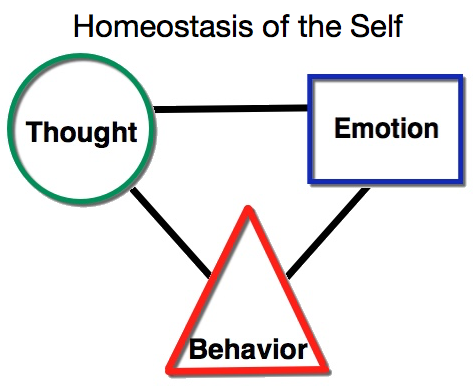
In our last discussion of bias, we took note of the human preference for consistency. Not only do we build upon previous learning and decisions with new choices when they are consistent with past behavior, we also strive for personal consistency in our thoughts, emotions, and actions. A lack of consistency and continuity among these three aspects of self causes an intensely uncomfortable mental distress. Information that challenges current thought, required behavioral compliance that contradicts thought and emotion, or the induction of intense, unpleasant feeling can create this disruption in the consistency of self. The experience of that painful stress is called cognitive dissonance.
Labels:
cognitive bias,
cognitive dissonance
Saturday, March 30, 2019
When Swimming in Biases, Try Not to Drown
Heuristics or those 'rules of thumb' that we use to cut through dense amounts of information to help us make timely decisions often involve availability biases. We remember ideas and select rationales based on how available they are to us – how close to the surface of our conscious thoughts those rationales lie. (We humans will grab the ideas that are most "available" to us – and sometimes, they are the most absurd.) When we lack enough information about a chain of events, we also draw on heuristics to 'fill in the gaps' between them so that we can better comprehend them. But they are shortcuts, and when we use these methods, we run at least some risk of falling into error.
Labels:
cognitive bias
Friday, March 29, 2019
Freeing Memory from Bias by Bringing it Captive
The process of memory awareness and noticing discrepancies and errors was named metamemory some forty years ago. We may recall something and have our memory of a place or an event in time, only to discover years later that we've misremembered elements of the narrative. Metamemory helps us understand the way that our self-justifying cognitive biases code and influence what we store as memory (which always differs somewhat from objective reality).
Labels:
Botkin Letter,
cognitive bias,
memory
Tuesday, March 26, 2019
Disparagements of Perspective or Lies of Malice? Be Free Indeed!
Totalist religion affords us a very tidy view of the world where little if any ambiguity exists. Some enlightened other came before and figured out all that people would need to know to guide themselves with great ease through the rough edges of life. That's how things were sold to me in my group of record as an adult. Critical thinking gets handed over to a religious overseer of souls, creating the illusion of moral blamelessness for members – a process dubbed 'moral disengagement'.
But there are no pat answers to life's complex problems, and we complex and conflicted human beings make things all the murkier. If you live under a totalist religion, you can skip over the murkiness into a view of black and white, and life becomes a zero-sum game. If someone 'wins' an argument, it means that 100% of the spoils of merit go to one sole survivor, and there can be no merit spared for the other contenders. That all-or-nothingness bleeds over into other areas, too, like power and love and care. If a contender gets some of those valuable commodities, it means that there is less comfort and accomplishment left for everyone else.
Monday, March 25, 2019
Thinking the Unthinkable: A Challenge for the Botkins
I thought about the Botkin daughters today – and it's approximately six weeks since I received their letter. As cognitive dissonance teaches us, all people find it uncomfortable when others believe unpleasant things about them, and it occurred to me that dissonance itself is something that I definitely share in common with these young women.
Labels:
Botkin Letter,
cognitive bias,
cognitive dissonance,
memory
Thursday, March 7, 2019
Cognitive Biases and Cranio Rectal Inversion Index
Just a reminder that the purpose of this discussion aims at stimulating thought and self awareness as tools to help those in recovery from trauma learn how to make safer choices. To make the discussion a bit lighter, we've defined Cognitive Biases as “CranioRectal Inversions” (CRI).
There are more posts to come which will first be featured at No Longer Quivering where you might want to watch for them, and they'll eventually find their way back here. For now, here are the posts on the subject through 2018. This list is not comprehensive, nor is it organized in a particular manner, save that they are loosely organized by general type (social, attributional, etc.). There are at least this many more to come.
Labels:
cognitive bias
Sunday, June 24, 2018
That Tricky Survivorship Bias and Recovery
Just a reminder that the purpose of this discussion aims at stimulating thought and self awareness as tools to help those in recovery from trauma learn how to make safer choices. To make the discussion a bit lighter, we've defined Cognitive Biases as “CranioRectal Inversions” (CRI).
This bias fascinates me because it has a direct impact on how many approach recovery from post cult trauma syndrome, as I believe that people make this common error in their assumptions. It is one of the many attribution biases – wrong assumptions due to informal logical errors that are often based on too little information and consideration of the wrong perspective on that information.
Saturday, October 28, 2017
Reviewing Liking and Social Proof as Weapons of Influence
Just
a reminder that the purpose of this discussion aims at stimulating
thought and self awareness as tools
to help those in recovery
from trauma learn how to make safer
choices. To make the discussion a bit lighter, we've defined
Cognitive Biases as “CranioRectal
Inversions” (CRI).
We've
reviewed the effect that liking has on us, and we tend to comply with
people that we like. Just to dig into this method of influence, lets
consider some factors that manipulators use to persuade us with
liking without our even realizing it:
Friday, October 27, 2017
Liking and Liked: More Attribution Biases that Merge Liking and Social Proof
Just
a reminder that the purpose of this discussion aims at stimulating
thought and self awareness as tools
to help those in recovery
from trauma learn how to make safer
choices. To make the discussion a bit lighter, we've defined
Cognitive Biases as “CranioRectal
Inversions” (CRI).
The
previous
post detailed a few Attribution Biases that cause us to make
errors based on our feelings more than sound reasoning, and we human
beings naturally show a prejudice for those things that we already
like. If we are good people who seek out other good people to
accomplish good things, we don't tend to anticipate certain problems.
This expectation intensifies when considering a religious leader
because they should be experts in and practitioners of good ethics
and morals. And if we seek them out, even apart from any kind of
considerations of hierarchy or authority that might influence how we
relate to them, we're likely to take for granted that they are
ethical. We certainly would not seek out a person whom we didn't
like.
Tuesday, October 24, 2017
When the Attribution Bias Makes Things Seem More Desirable
Just
a reminder that the purpose of this discussion aims at stimulating
thought and self awareness as tools
to help those in recovery
from trauma learn how to make safer
choices. To make the discussion a bit lighter, we've defined
Cognitive Biases as “CranioRectal
Inversions” (CRI).
In the
context of spiritual abuse and how biases effect us, I thought of
other instances that strike me as similar to the Cheerleader
Effect but involve more of what is actually a type of Attribution Bias. (There's more to come about that bias in posts to
come.) There are several subtypes of this type, but I see the
effects of what we see, believe is available, and find desirable as a
consequence as similar to some of the factors that may be in play in
the Cheerleader Bias. We also can tend to be more open to
considering owning the same things that they do because the
association connotes the idea that those things are somehow better
than equally good alternatives.
Monday, October 23, 2017
CranioRectal Inversions Cheering Us On (The Cheerleader Effect)
Just
a reminder that the purpose of this discussion aims at stimulating
thought and self awareness as tools
to help those in recovery
from trauma learn how to make safer
choices. To make the discussion a bit lighter, we've defined
Cognitive Biases as “CranioRectal
Inversions” (CRI).
Another
very human trait with which perspective can trick us is most commonly
known as the Cheerleader Effect. Some of it owes to the way that we
process visual information against contrasting elements in a field of
view, but we also have deep psychological wiring that also affects
how we interpret what we see. Some of that might also involve the
suggestion that if a person is photographed with other people, they
must have relationships which include activities that are enjoyable
enough to wish to photograph. At the most simplistic level, people
look more attractive to us when they are in a group with others. No
one seems to know exactly why, but ongoing research continues
to validate that the Cheerleader Effect influences all of us.
Thursday, October 12, 2017
Optimism, Hardship, and Pathways to Peace
Continuing the consideration of cognitive bias of optimism as a coping mechanism, this installment continues from this most recent one, and the whole series of posts can be found HERE. It explores how I am reconsidering optimism to make it my friend as opposed to my foe by finding a healthy balance between too much optimism and a life only half lived. It is a part of a broader discussion of how those in recovery from trauma can make safer choices in their relationships.
The Serenity Prayer encourages us to
sort out what we can realistically change from that over which we
have no power to change. Critical to serenity, however, is
acceptance of those things which we don't really like all that much.
It confronts our tendency to create unrealistic fantasies about what
we want the world to be – “how I would have it” – and
encourages us to focus on those things that are well within our grasp
to change for the better. Wasting hope and energy in exercises of
futility do no good for anyone, and they drain us of the energy we
need for more reasonable, achievable aspirations.
Labels:
Balanced Optimism,
cognitive bias,
Love,
Stage 1 Healing
Wednesday, October 11, 2017
Getting Back to Biases (Self-Worth's Role in Optimism)
When I
started this series of posts, I knew that it would be a deeply
personal journey. I aspire to live up to and be accountable for
what I learn, and I didn't think that I could take much more thought about optimism specifically, though I apparently think about it more
often than not. For months, I've been ruminating on just how often I
use a too glowing view of people and the world as a means of coping
with the unpleasant aspects of life. I took some time off from the
subject to do some soul searching, and I started to see many
themes come together.
This post discusses the use of the cognitive bias of optimism as a coping mechanism, continued from Part I here. A whole series of posts continues HERE, exploring how I've aspired to make optimism my friend and not my foe. It is a part of a broader discussion of how those in recovery from trauma can make safer choices in their relationships.
Labels:
Balanced Optimism,
cognitive bias,
Love,
Stage 1 Healing
Tuesday, April 11, 2017
Bursting Bubbles and Feeling FUBAR
It
always amazes me when my brain tunes into something, and suddenly, I
start seeing examples the same message everywhere I look and in the
most unlikely of places. My last few blog posts considered optimism
as a coping mechanism. It was part of a series of posts about
cognitive biases – the errors of thought that people make when
interpreting the meaning of what happens to them or what they
observe.
Optimism
proves to be a bit of a paradox
in that it is a hard bias to reduce, but it also fosters hope which
becomes a powerful motivator for positive change. People who lean
towards optimism tend to be happier, and the belief that an effort
will be met with success can literally and dramatically improve a
person's chance of success. The tricky part involves striking a safe
balance between an optimism that fosters positive change while
avoiding the pitfall of recklessness through risk-taking. We need
some buffer to help us cope with the fact that life is not fair and
that we are flawed creatures with limited power. And in life,
sometimes the bubbles we create wear
out their usefulness as we change and grow.
Subscribe to:
Posts (Atom)