Showing posts with label cognitive dissonance. Show all posts

Monday, April 27, 2020

May Our Tears be Translated When the Bell Tolls for Us

I just poured my heart out in a post on No Longer Quivering -- about an expression of grief about the pain what is essentially cognitive bias which ends up leaving us with the feeling of cognitive dissonance when reality breaks through our fantasy.

We see what we want to see as we begin our journey in life.  In high demand groups, we must take the diversity of the world and transmute it into a scheme of black and white.

Monday, April 15, 2019

Wednesday, April 3, 2019

Self-Justification's Role in Cognitive Dissonance

Whether we consider memory, our personal history, or a decision we made today, without our notice, our trait of consistency likely rules us. If anything was truly an innate trait that we humans suffer because of the Fall of Man, surely it is the illusion that we are independent, self-sufficient creatures. Self-justification rests the heart of our struggle to comfort our egos and acts as comfort's right hand. We strive to be enough on our own, free from a Creator, and our very own brains write the narrative to convince us that it is so.

Knowledge of how our minds work and why they work the way that they do can mature us. We can learn to slow down the knee-jerk self-justification process to give us more time to respond to life instead of just reacting to it. Whether we seek to minimize our own culpability for an error or craft a history that softens our regret, if we are aware of this very human quality, we stand a better chance of circumventing its pitfalls. We will never break free of bias, but we can learn to be better stewards of our own thoughts, feelings, and behavior. 

Tuesday, April 2, 2019

External and Internal Expressions of Cognitive Dissonance

The last post left us wondering about the results of Leon Festinger's study of forced behavioral compliance. Participants were placed into two separate groups, one of which was well paid, and the other which received a nominal amount to compensate them for their time in the tediously boring hour and the request to lie to the new test subjects on their way out. 

(Note the adjustment in the value of the reward in this blog post to approximate a contemporary value.) Only one group described the test as unpleasant, and the other claimed that they enjoyed performing the study, expressing positive feelings about it. But which group enjoyed themselves?

Monday, April 1, 2019

Studying the Stress of Forced Compliance

Read Part I here.

What evidence exists to support the claim that a person will change their thoughts and even their record of events to assuage the distress of cognitive dissonance? For that, we must travel back to Stanford in the 1950s to examine Festinger's study.

Students at Stanford were recruited with the understanding that they were helping the school to streamline their study design concerning “Measures of Performance.” The students did not realize that they were being observed to determine how they would handle the stress of cognitive dissonance, believing the study to be a measure to improve the research method that the school employed. Each student was paid for their time.

Sunday, March 31, 2019

Revisiting Cognitive Dissonance

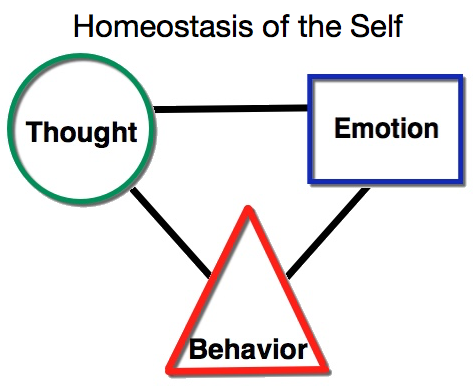
In our last discussion of bias, we took note of the human preference for consistency. Not only do we build upon previous learning and decisions with new choices when they are consistent with past behavior, we also strive for personal consistency in our thoughts, emotions, and actions. A lack of consistency and continuity among these three aspects of self causes an intensely uncomfortable mental distress. Information that challenges current thought, required behavioral compliance that contradicts thought and emotion, or the induction of intense, unpleasant feeling can create this disruption in the consistency of self. The experience of that painful stress is called cognitive dissonance. 

Elizabeth Loftus on the Memory Illusion


Tuesday, March 26, 2019

Disparagements of Perspective or Lies of Malice? Be Free Indeed!

Totalist religion affords us a very tidy view of the world where little if any ambiguity exists. Some enlightened other came before and figured out all that people would need to know to guide themselves with great ease through the rough edges of life. That's how things were sold to me in my group of record as an adult. Critical thinking gets handed over to a religious overseer of souls, creating the illusion of moral blamelessness for members – a process dubbed 'moral disengagement'. 

But there are no pat answers to life's complex problems, and we complex and conflicted human beings make things all the murkier. If you live under a totalist religion, you can skip over the murkiness into a view of black and white, and life becomes a zero-sum game. If someone 'wins' an argument, it means that 100% of the spoils of merit go to one sole survivor, and there can be no merit spared for the other contenders. That all-or-nothingness bleeds over into other areas, too, like power and love and care. If a contender gets some of those valuable commodities, it means that there is less comfort and accomplishment left for everyone else. 

Monday, March 25, 2019

Thinking the Unthinkable: A Challenge for the Botkins

I thought about the Botkin daughters today – and it's approximately six weeks since I received their letter. As cognitive dissonance teaches us, all people find it uncomfortable when others believe unpleasant things about them, and it occurred to me that dissonance itself is something that I definitely share in common with these young women. 

Thursday, September 15, 2016

Coming to Terms with Confirmation Bias


The purpose of this discussion aims at stimulating thought and self awareness as tools to help those in recovery from trauma learn how to make safer choices. To make the discussion more jocular, we've defined Cognitive Biases as “CranioRectal Inversions” (CRI).

On a practical and personal level, I find that many biases overlap, allowing us to see the world favorably and in a way that paints us in a favorable light. As noted in the previous post, we have to trust our own perceptions as reasonably accurate as a starting point, and from that assumption, we can adapt and adjust them in light of new information. If we are healthy and live in optimism, we must trust in our perceptions until we're given cause to do otherwise. We also tend to give others the benefit of the doubt until they give us cause to doubt them.

Tuesday, September 30, 2014

Qualifying "Creepy": Cults and Cognitive Dissonance

Relativity (Escher)
A few years ago, I took the dialogue from the script of The Matrix film and changed some of the language to fit a spiritually abusive situation – to describe that splinter-in-your-mind feeling. You know something seems to be “off,” but you're not sure what it is. The only thing that you can really pinpoint as “off” at the very start of it is your feeling for which you have little evidence.

Let's exaggerate things a bit with an obvious example of something somewhat related to the splinter in your mind.

If we are reasonably mentally heathy, we have a sense of optimism. For some of us who have been through trauma, our optimism (which might be too strong of a word) may only be a search for reasons to get out of bed in the morning. When coping with all that we must to get through life, we take much for granted, and our level of optimism or lack thereof dictates the ease with which we trust the subtle or obvious cues. When others use that which we take for granted (the shortcuts of assumption) against us for their gain and at our expense, these shortcuts become “Weapons of Influence.”

Saturday, December 14, 2013

After the Epiphany Moment: Making Sense of Your History in Light of Spiritual Abuse


In the last post, I defined what I call the “epiphany moment” – the moment at which a member of a spiritually abusive group finally begins to consciously consider that the pain that they endure to be a part of the group may not be worth it. Whatever benefit they gain just isn't worth the compromise that they're asked to make or the collateral damage suffered. Within the context of the cycle of spiritual abuse, this moment of realization usually falls within the Confrontation Phase of the process after conflict and tension has built up over the course of time spent in the group. 

 Another former member once described this moment by using the analogy of a shelf upon which memories of confusing experiences and doubts were stored but avoided. One day, your shelf just breaks, and you must make a moral choice. Do you step back from membership to deal with the doubts and the things you overlooked, or do you turn the shelf of doubt into a heap on the floor so that you can return to the convenience of your life within the group?

The Epiphany Moment: When Your Confidence In Your Religious Group Falls Apart


Graham Chapman / Monty Python 
Whenever I talk to people who have exited a spiritually abusive group, I usually ask them about what I have come to describe as the “epiphany moment” – the moment when circumstances force them to acknowledge that there is something desperately wrong, and they find themselves no longer able to make excuses for what they observe or experience.  (It's as if Graham Chapman comes in and knocks all of the books off of your shelves!)  

Everyone who has walked through the process knows that moment well when they felt the foundations of their trust fail. It's a point at which the the pain necessary to maintain group membership suddenly, significantly, and painfully outweighs any benefit and gain. I believe that people who remain in a group often have such moments, too, but they choose to ignore the conflict so that they can remain a part of their group.

Sunday, February 17, 2013

Family Dogs Get Better Breaks than do Comp Wives: The Heart of Domestic Abuse in the Heart of the Complementarian Mindset

*trigger alert*

When I first heard Janet Levinson from the Protective Mother's Alliance speak for the first time, I had no idea what was coming. I sat near the front, and I remember wishing later that I'd hidden somewhere in the back of the crowd. Tears streamed down my face throughout her entire presentation. Why, you many wonder? Her talk reminded me of the plight of many wives mothers I've come to know... in the churches I've attended. When churches dehumanize and vilify women, for several reasons, the family dog often gets higher esteem.


Secrets About Domestic Abuse Under Gender Hierarchy

The Shepherding Discipleship Movement church I attended in the Nineties followed the dynamics described in this recent post. Abused women who attended there were called to let “ooey gooey love cover” their husbands' sins against them because of gender hierarchy. (Of course, at the time, I had no clue that there was such a thing as a “Shepherding Movement,” nor that domestic violence was tolerated within it.) These types of churches view a woman's lack of complete and unqualified submission as the source of all family conflict, treating it as an unpardonable sin. When I say that the church expected wives to “cover” her husband's sins, those sins notably included domestic violence, adultery, and pornography.

Monday, December 3, 2012

Cognitive Dissonance in Confrontation and the Process of Forgiveness

Note:  Trigger alert for sexual abuse.

Why We Don't 
Hear One Another
In Conflicts

An upcoming post discusses a situation in an important relationship in my own life as an example of forgiveness when it gets messy. Before heading there, I would like to revisit the concept of cognitive dissonance because of the major role that it plays in conflicts. I believe that both the offended person and the offender within complicated matters of offense and forgiveness will experience it at many times along the way during the overall process. Understanding the phenomenon can help us manage our own actions and thoughts as well as help us to understand our offenders compassionately.

Friday, March 23, 2012

What Do You Risk When You Go to a Star Chamber/Hot Seat Meeting? (and more on the never ending Mars Hil/Driscoll Drama)


I was quite surprised that, while I'd already begun posting on this topic, a former elder/pastor of Mark Driscoll's Mars Hill organization came forward online to reveal the details of their own experiences within a spiritually abusive system. The husband and wife team have written some details about different star chamber meetings that they'd attended as a part of their experiences there.

Tuesday, March 20, 2012

The Violence of Thought Conversion: Wrapped in Gentleness and in Cruelty

I thought I would mention a bit more about my own experience with informal discipline tactics that church leaders and cultic groups use to exploit and manipulate members. In years past on this site, I've mentioned the many gentle sessions of double bind and informal logical fallacy I endured directly with my pastor in his study when I approached him about things that were said from the pulpit that didn't quite sound right doctrinally. When I left the church office, I would feel disoriented and exhausted in a detached and pleasant sort of way, and I'd often go home to nap until dinner.

Monday, March 19, 2012

Thought Conversion on the Hot Seat


In the previous post, I discussed what my husband and I dubbed “The Star Chamber,” the interrogation and intimidation sessions that our former cultic church elders regularly adjudicated in the pastor's study when they wanted to address what they saw as serious behavioral non-compliance in members. Though the elders had their star chamber meetings, the thought conversion exercises were not limited to those more formal sessions. Though their manipulation was certainly not limited to only the formal sessions, the confrontations with the group of elders was quite powerful. Manipulation in informal settings can be just as effective, but star chamber sessions could affect much emotional, psychological, and spiritual harm, a special practice that involved a higher level of manipulation and force because of the ritual and the fact that a person was outnumbered by eight authority figures (the number of elders and pastors we had at the time of my attendance).